
Discovering the specific surface area of materials is vital in various scientific and industrial applications porosity analyzer. This article elucidates the diverse methods employed for precise measurements, including Gas Adsorption Techniques like the BET Method, as well as Physical Sorption Methods and Mercury Intrusion Porosimetry.
By delving into Image Analysis Processes, researchers can gain valuable insights into material characteristics. This comprehensive overview equips readers with the necessary knowledge to select the most suitable technique for their specific requirements.
Key Takeaways
- Gas adsorption techniques are crucial for determining specific surface area of materials in industries like pharmaceuticals and nanotechnology.
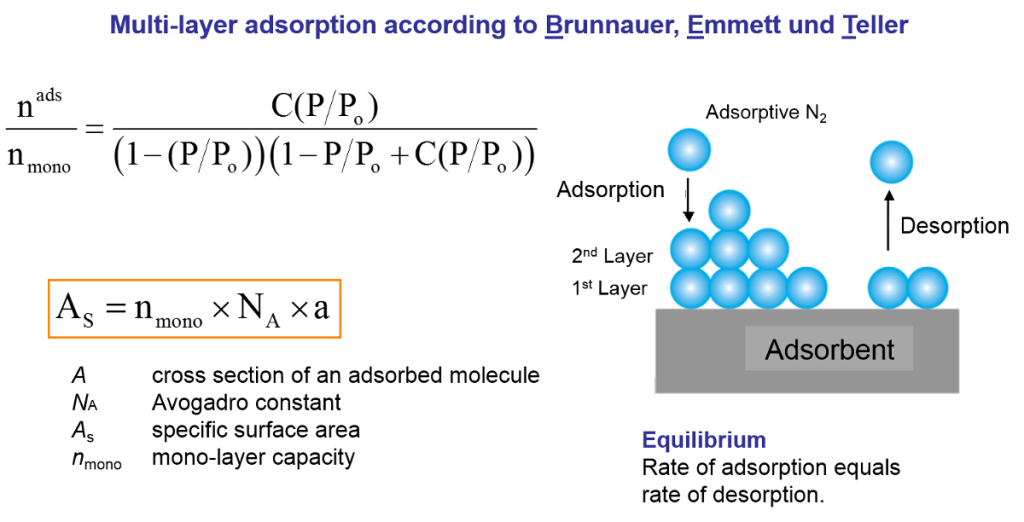
- The BET method, developed by Brunauer https://laballiance.com.my/, Emmett, and Teller, is widely used for accurate measurements of specific surface area through gas adsorption.
- Physical sorption methods provide valuable insights into material properties and are versatile in analyzing various materials, especially porous substances like activated carbon.
- Mercury intrusion porosimetry is a non-destructive and highly accurate method for determining pore structure and distribution of materials with complex pore structures.
Gas Adsorption Techniques
Gas adsorption techniques utilize a variety of methods to determine the specific surface area of materials through the adsorption of gases onto the material’s surface. By measuring the amount of gas adsorbed at different pressures, the surface area can be calculated using equations such as the Brunauer-Emmett-Teller (BET) equation.
These techniques are crucial in various industries, including pharmaceuticals, nanotechnology, and environmental science, as they provide valuable information on the material’s porosity, reactivity, and overall quality. Researchers and engineers rely on gas adsorption methods to optimize processes, develop new materials, and ensure product performance.
Understanding the specific surface area of materials allows for precise control and manipulation, empowering industries to innovate and deliver products that meet the demands of a free-thinking market.

BET Method
Continuing from the gas adsorption techniques discussed previously, the BET method is a widely utilized approach for determining the specific surface area of materials through gas adsorption.
Developed by Brunauer, Emmett, and Teller, the BET method is based on the physical adsorption of gas molecules onto the material’s surface. By analyzing the multi-layer adsorption of gas molecules, the BET method can calculate the specific surface area by fitting the data to a mathematical model.
This method is favored for its ability to provide accurate surface area measurements for a wide range of materials, including porous substances like zeolites, activated carbon, and catalysts. Researchers appreciate the versatility and reliability of the BET method in characterizing materials with varying surface properties.
Physical Sorption Methods
One commonly employed approach for determining the specific surface area of materials involves utilizing physical sorption methods. Physical sorption methods, such as gas adsorption techniques, rely on the principle of gas molecules adsorbing onto the material’s surface. By measuring the amount of gas adsorbed at different pressures or temperatures, the specific surface area can be calculated.
These methods are favored for their accuracy and ability to analyze a wide range of materials, including porous substances like zeolites, activated carbon, and catalysts. Researchers appreciate the versatility of physical sorption methods, as they can provide valuable insights into the surface properties of various materials, aiding in the development of advanced technologies and innovative solutions.
Mercury Intrusion Porosimetry
Building upon the insights gained from physical sorption methods, an effective technique for determining the pore structure and distribution of materials is Mercury Intrusion Porosimetry.
This method involves subjecting the material to increasing pressures of mercury, which penetrates into the pores and cavities. By measuring the volume of mercury intruded at different pressures, the pore size distribution and total pore volume can be calculated.
Mercury Intrusion Porosimetry is particularly useful for materials with complex pore structures, providing valuable information for various applications such as in the fields of catalysts, ceramics, and pharmaceuticals. Its non-destructive nature and high accuracy make it a preferred choice for researchers and engineers seeking detailed insights into the porosity of materials.
Image Analysis Processes
Image analysis processes play a crucial role in quantifying the specific surface area of materials with precision and accuracy. By utilizing advanced imaging techniques, such as scanning electron microscopy (SEM) and transmission electron microscopy (TEM), researchers can analyze the microstructure of materials at a nanoscale level. These images are then processed using specialized software to calculate the surface area based on parameters like particle size, shape, and distribution.
Additionally, image analysis allows for the identification of surface features like pores and cracks, contributing to a more comprehensive understanding of the material’s surface characteristics. Overall, image analysis processes provide valuable insights into the specific surface area of materials, aiding in the development of innovative applications across various industries.
Conclusion
In conclusion, there are various methods available for measuring the specific surface area of materials. Gas adsorption techniques such as the BET method and physical sorption methods like mercury intrusion porosimetry are commonly used. Image analysis processes can also be employed for this purpose.
Each method has its own advantages and limitations, and the choice of technique will depend on the specific properties of the material being analyzed.